

Expert Analysis
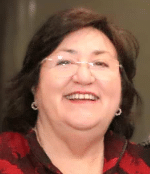
By Janine Zimbler, President BB ANZ
Looking back, I feel strongly that I have given and gained much from my professional career. As a member of B’nai B’rith, volunteering continues to enrich my life and drive my personal growth. My life’s purpose and values align strongly with those of the organisation, and I am very proud to hold the position of president of B’nai B’rith Australia and New Zealand.
There have been several highlights in my volunteer work for B’nai B’rith. One that stands out strongly was attending the BBYO Convention in Orlando, Florida, in 2024. There approximately 3,500 Jewish teens representing BBYO chapters in 36 countries converged, enabling me to see the global network of Jewish teens BBYO has established and the future leaders it is developing. It made me aware of just how vital the role of BBYO is to Jewish continuity, community, and our collective future. With that in mind, BB New South Wales funds BBYO in Sydney and JCA funds BBYO in Canberra.
Perhaps the greatest highlight so far, was attending the Latin American B’nai B’rith International Mission from 3 May – 9 May, 2026, visiting Buenos Aires, Santiago, and Montevideo. Advocacy on behalf of all Jewish people has been at the core of B’nai B’rith International since its inception. Those familiar with B’nai B’rith at the local level will know that it is committed to community service, emergency, and disaster relief, fighting discrimination in all its forms and the support and defence of Israel. With chapters and members in 50 countries around the world, B’nai B’rith can honestly call itself the global voice of the Jewish community.
At the international level B’nai B’rith is an accredited NGO at the United Nations, and advocates at UNESCO in Paris and the Human Rights Council in Geneva on behalf of world Jewry.
Where countries don’t have an organised Jewish community, B’nai B’rith leads missions to ensure that their concerns reach the highest levels. This is what I witnessed firsthand. Our mission facilitated the ability for local Jewish leaders to meet with their Israeli and American ambassadors, various critical politicians and even the presidents of two of the three countries we visited. Most importantly it allowed their issues to be presented, raised, and discussed. It was advocacy on behalf of the interests of the Jewish communities of those countries and world Jewry at its best. This was best illustrated in Uruguay where our delegation was the first Jewish group the sitting president, Yamandu Orsi, had ever received since taking office.
Heading the mission was Rob Spitzer, president, and Dan Mariaschin, CEO, of B’nai B’rith International. Dan Mariaschin has some 38 years of global advocacy and leading missions around the world under his belt. He is a true statesman, and I watched in awe as he led a process which started with us meeting the local Jewish leadership, the B’nai B’rith leadership and then taking their and global Jewish concerns up and down the political chain. Delegates included B’nai B’rith International’s senior vice presidents representing North America, Mexico and Argentina, Europe, and the UK. I was the only woman officer included in the official delegation. What I discovered to my amusement is that Australia is regarded as a very exotic country to the South Americans! Everyone I met on hearing that I had come all the way from Australia voiced the same incredulous response!
The schedule of the mission was very hectic. We attended five or six meetings a day and each evening concluded with a special function. At these events, Dan Mariaschin was honoured by the local community as he is retiring after 28 years at the helm of B’nai B’rith (38 years total with the organization) and Rob Spitzer gave an address.
One meeting that stands out was when the delegation had the privilege of meeting the Co-presidents of IHRA (International Holocaust Remembrance Alliance), Marcelo Mindlin who himself is the president of Pampa Energy and owns the Holocaust Museum and Fabiana Loguzzo, who is the special envoy to combat anti-Semitism in Argentina, appointed by the president of Argentina with the status and privileges of an ambassador.
There are estimated to be half a million Jews in South America. There are about 200,000 in Argentina, 100,000 in Brazil, 50,000 in Mexico, some 17,000 in Chile, 20,000 in Uruguay and small numbers in Peru and Panama. B’nai B’rith has been present in South America for 90 years and has chapters in all these countries. It is represented by B’nai B’rith Latin America President Hymie Fuchs, and B’nai B’rith Latin America Director Eduardo Kohn.
The Jewish community of Argentina has an interesting history. Thousands of Russian and Eastern European Jews were sponsored to go live and work in the rural areas and form agricultural colonies by Baron Maurice Hirsch, a German Jewish philanthropist in the late 19th Century, to escape persecution. They became known as the Jewish gauchos!
Unfortunately, the Argentina community has experienced a lot of unresolved traumas in this century. At present it has the support of a president who is a firm believer in social justice and righting past wrongs. President Javier Milei attends shul and has been learning the Torah. He has made his rabbi the ambassador to Israel which is seen as quite a controversial appointment. Unfortunately, I gather he is not widely popular and may not serve another term. In September 2025 he was honoured by B’nai B’rith with its Presidential Gold Medal, the organisation’s highest award, for his support of the Jewish community and Israel.
Argentina has a very organised Jewish community. At its helm is DAIA, which leads the community, takes care of institutions, and prosecutes all legal issues related to anti-Semitism. B’nai B’rith Argentina was one of the founders of DAIA. Working to help the people is AMIA. In July 1994 the building in which they both were located was destroyed by a car bomb believed to be planted by Hezbollah and supported by Iran; some 85 people were killed and 300 injured. This building has now been rebuilt, and we have a lot to learn from them as to how to memorialise victims of terrorism. Those responsible have never been brought to trial in the country, and the prosecutor who investigated the case was likely assassinated. DAIA is still pursuing this case. Earlier, in 1992, on March 17, the Israeli embassy was bombed and 29 people were killed. These are both open cases with no closure.
Further, during the period of the military dictatorship from 1976 to 1983, an estimated 30,000 dissidents ‘disappeared.’ Of the 9,000 names that have been recorded, some 2,000 were Jewish, which represents a very high percentage.
Argentina has a federal political system. In addition, Buenos Aires is a city-state and has its own parliament. The former Jewish minister of security (Federal) whom we met, and who is now in the city parliament is determined to keep Jews safe at all locations. He has identified 40 possible venues and all appropriate staff working in these locations have been sent on a full security course. It was interesting to hear that in a population of 47 million, other than the police, only 300 people are licenced to own firearms.
Since 2002 B’nai B’rith Argentina has worked together with American organizations called Brother’s Brother Foundation and Americares to redistribute surplus medicine and medical equipment to public hospitals and the rural poor. This is a highly revered project. Apparently more than $100 million worth of medicines has been distributed, 90 million tablets and about four million Argentinians have benefited.
Uruguay is home to about 20,000 Jews and in a total population of three million people, represents the highest proportion of Jews in Latin America relative to its total population. The previous three presidents whom we met were all very supportive of the Jewish community and Israel. However, the current president and his government have not taken a strong stand against Hamas and Hezbollah, and they have not been declared terrorist organisations. Of concern is that the Iranian embassy has 100 staff members. These terrorist organisations can hold bank accounts and operate freely in the country. There is a concern that this lenient attitude could create a soft underbelly for them to launch terrorist activities in Latin America from. The current president was most interested to hear about all that had transpired since Oct. 7, 2023, in Australia. B’nai B’rith Uruguay is currently looking at developing Holocaust Education classes in schools in the country, and I am working to introduce them to Courage to Care here in Australia.
In Chile, if I have recorded this correctly, the Jewish community of 17,000 has apparently 50 different Jewish organisations, two country clubs which they share with the Korean and Japanese community (as they have been denied membership to others), three Jewish day schools, and eight synagogues and two volunteer Jewish Fire Stations called Bomba Israel—one in Santiago (founded 1954) and the other in Valparaiso (founded 1971). Their emblem is the Magen David, they sing Hatikvah and have adopted the Israeli flag. Some of the volunteers are Jewish.
Most of the Jewish population is based in Santiago which is a most beautiful city located in a valley surrounded by the Andes mountains. Sadly, because of its geography there is a lot of pollution that hovers over the city.
Chile is home to approximately 500,000 descendants of Catholic Palestinians who fled to escape the Ottoman rule a century ago. They are a very wealthy group of people and integrated into all areas of civil and civic society. Until Oct. 7, 2023, they enjoyed a very cordial relationship with the Jewish Community. Since then, they have become politicized and have been declaring that their community left pre-state Israel because of the Jews, and that it was the Jews, not the Muslims, that had been killing Christians! This rewriting of history is of real concern for the local Jewish community.
B’nai B’rith Chile is very active with some 300 members who meet weekly or fortnightly in their 10 chapters. They have inspiring projects—one is an archive preserving the history and legacy of the Jewish community of Chile, another is a job platform which has found 250 jobs for members of the community and the third is a scholarship program to keep vulnerable young people in school. So far, they have 150 graduates of that program. They employ a social worker to administer it.
There were several recurring themes to the discussions which I think should remain confidential; however, you might be interested to learn that encouraging Latin American countries to join IHRA, adopt the IHRA definition of anti-Semitism, and declare Hamas and Hezbollah terrorist organisations, were high on the list. The Latin American governments were also encouraged to opt out of attending any commemorative events marking the 25th anniversary of the Durban Conference at the opening of the United Nations General Assembly as these will probably reflect a very anti- Israel bias. B’nai B’rith Internationalis very keen to gain observer status on IHRA.
I was interested to learn and to share that in Chile and in Latin America, there are an estimated two million evangelical Christians who identify as Jewish and a further large population of Jews for Jesus followers. All are apparently claiming the right to return to Israel and to make Aliyah.
I feel privileged to have been invited to participate in this mission. As a former family therapist, finding myself part of a process that advocates on behalf of our Jewish family on the other side of the world was a deeply meaningful and spiritual experience.
 Janine Zimbler has served as president of B’nai B’rith Australia New Zealand since 2025, following four years of leading revitalization efforts at B’nai B’rith NSW. Click here to learn more about B’nai B’rith ANZ.